

Introduction
There was a time when 'I'm tired' was an answer to a question. Today, it is a greeting, a disclaimer, and a constant state of being. We have entered an era where exhaustion is the norm, where being tired is a constant hum in the background. Behind every office meeting, every social gathering, and every quiet moment of 'rest' spent doom scrolling on our devices. This is what we call the Chronic Fatigue Culture.
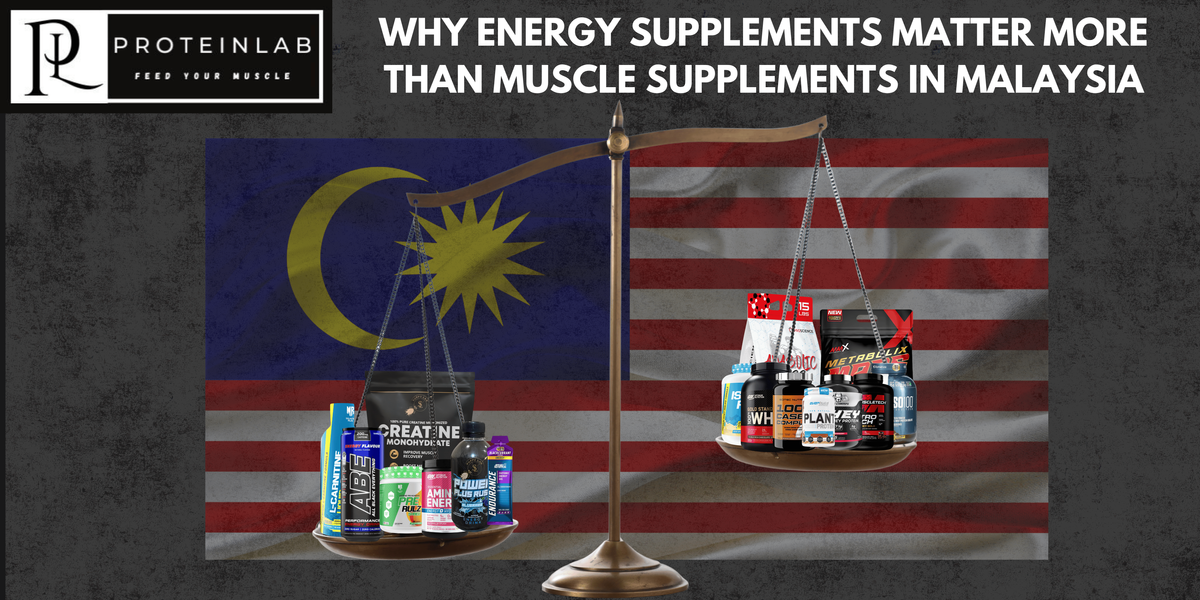
By definition, chronic fatigue culture refers to the growing normalisation and often glamorisation of constant exhaustion as a regular part of modern life. Instead of being seen as a warning sign, feeling tired all the time is often treated as expected, or even admirable. Being perpetually exhausted is now considered a status symbol or a baseline for "adulting" instead of the problem it truly is. Because while most people still prioritise muscle-building supplements, the real limitation in daily performance is no longer strength; it’s sustained energy, recovery, and resilience.
Chronic fatigue culture is the idea that
Being busy = being successful
Rest = laziness
Hustle = productivity
Sleep deprivation = dedication
In this culture, fatigue is treated as a measure of performance. If you aren’t tired, the implication is that you aren’t working hard enough or living to the fullest.
Workplace Grind: Employees often feel pressured to participate in ‘Hustle Culture’, where sacrificing sleep and personal time for professional output is seen as a moral virtue.
Social Burnout: The pressure to have an active social life creates a culture of performance fatigue.
Social Media Comparison: Online platforms like Instagram and TikTok constantly show people being productive, fit, successful, and active which creates the pressure to always do more.
Economic Pressure: In the economic world we live in today, the high living costs, competitive job markets, and side hustles mean many people have to work multiple jobs or long hours just to survive.
Digital Overstimulation: These days work doesn’t just stop when you clock out. The constant notifications, emails, and 24/7 connectivity prevent people from having any real mental rest.
Lifestyle-Induced Energy Depletion
Unlike medical fatigue, modern exhaustion is largely lifestyle-induced. It is driven not by disease, but by the cumulative effects of how we live, work, and recover.
What causes it?
Disrupted Sleep and Circadian Rhythm
Irregular sleep patterns, late nights, screen exposure, and inconsistent schedules disrupt the body’s circadian rhythm, which regulates sleep, hormone release, metabolism, and cognitive function. This disruption leads to:
Elevated cortisol at inappropriate times
Suppressed melatonin production
Increased sympathetic nervous system activity
Over time, this creates a state where the body is biologically awake but functionally exhausted, reducing both your physical and mental performance.
Chronic Stress and HPA Axis Dysregulation
Modern work culture promotes constant output with minimal recovery. This keeps the body in a prolonged sympathetic (fight-or-flight) state, activating the hypothalamic-pituitary-adrenal (HPA) axis. Chronic HPA axis activation leads to:
Dysregulated cortisol rhythms
Impaired insulin sensitivity
Reduced testosterone and thyroid function
Increased systemic inflammation
This often results in a state of being mentally wired but physically tired.
Sedentary but Mentally Overloaded
In Malaysia, many office workers spend 5 – 8 hours seated during the work day carrying out mentally taxing tasks. This combination of physical inactivity and mental overload is particularly draining. The reduced muscular activity from prolonged sitting lowers glucose uptake efficiency, lipoprotein lipase activity (fat metabolism) and overall metabolic rate, while the prolonged cognitive demand increases neural energy consumption. Without physical movement to support circulation and metabolism, this leads to early-onset fatigue despite minimal physical exertion.
Nutritional Energy Gaps at the Cellular Level
Energy is not just about calorie intake; it is also about cellular energy production. The body relies on several micronutrients to function as cofactors in mitochondrial ATP production:
B-complex vitamins: Required for enzymatic reactions in the citric acid cycle
Magnesium: Stabilises ATP as Mg-ATP, the biologically active form
Iron: Essential for oxygen transport and the electron transport chain
Even mild deficiencies can create a bottleneck in energy production, leaving you feeling persistently fatigued despite adequate food intake.
Dopamine Dysregulation and Digital Overload
Constant exposure to high-stimulation digital environments alters the brain’s reward system. Frequent dopamine spikes from scrolling, notifications, and instant gratification create a "dopamine deficit state" that can lead to:
Reduced dopamine receptor sensitivity
Downregulated dopamine production in the brain
Decreased motivation and focus
Mental fatigue and “brain fog”
At the same time, the continuous low-level stress from notifications keeps the nervous system in a state of hyper-arousal, further draining your energy reserves.
Overtraining Without Recovery
In an attempt to combat low energy, some people may increase their training intensity. Without adequate recovery this can lead to overtraining syndrome (OTS), which shifts the body from a healthy state of adaptation to a pathological state of chronic energy depletion. Physiologically this can show up as:
HPA axis dysregulation
Chronic low-grade inflammation
Increased protein breakdown
Instead of generating energy, excessive training without recovery amplifies fatigue.
Emotional Burnout and Cognitive Load
Chronic psychological stress from financial pressure and social comparison places a significant burden on the nervous system. This generates a lot of emotional stress, leading to emotional burnout, which is associated with:
Impaired executive function
Increased cognitive effort for simple tasks
Persistent sympathetic nervous system activation
This creates a state where even rest does not restore energy, because the brain remains in a continuous stress response.
Long Commutes and Environmental Stress
If you’ve ever lived in Malaysia, you’re probably aware of the infamous rush hour traffic that keeps people on the roads for hours at a time in some areas. According to the TomTom Traffic Index, in 2025 Malaysians on the road lost about 84 hours to rush-hour traffic. short commute to work taking maybe double or triple the time it should due to traffic or overcrowded public transport:
Reduces sleep duration
Increases psychological stress
Prolongs sedentary behaviour
By the time the workday begins, many people are already operating at a significant energy deficit.
The Shift: From Muscle Performance to Energy Management
Traditionally, supplementation has mainly focused on muscle growth, strength, and gym performance. However, for most Malaysians today, the limiting factor is not how much weight they can lift or how much protein they consume; it is how much energy they have throughout the day, how well they recover, and how effectively their bodies manage stress. Muscle supplements optimise output during training; energy supplements optimise function across the entire day. In today's fatigue-driven environment, daily function matters more.
Sustainable Energy vs Stimulants
In the fast-paced Malaysian lifestyle, many people rely on stimulants to stay productive. However, these only provide temporary alertness.
Caffeine blocks adenosine, reducing the feeling of tiredness temporarily. Adenosine is a natural chemical that builds up in your brain when you’re awake and binds to receptors to make you feel drowsy. Caffeine has a similar chemical structure to adenosine, allowing it to bind to these same receptors and prevent adenosine from attaching. It also indirectly triggers the release of stimulating neurotransmitters like dopamine and norepinephrine, which increase alertness and improve mood. However, caffeine does not stop the body from producing adenosine. While the receptors are blocked, adenosine continues to build up in the background, and eventually, when the caffeine has been metabolised, the accumulated adenosine rushes into the receptors all at once, leading to a caffeine crash.
High sugar intake causes a rapid rise in blood glucose followed by a crash. When you consume simple sugars, they are broken down almost immediately, flooding the bloodstream with glucose. In response, your pancreas releases insulin to move that glucose into your cells for energy. Because the insulin response is so sharp, it often clears too much sugar from the blood, causing your glucose levels to drop below your normal baseline.
While effective in the short term, these methods don't really improve energy production and may worsen long-term fatigue and lead to dependency cycles. In contrast, sustainable energy support:
Enhances mitochondrial efficiency
Supports hydration and recovery
Improves stress adaptation
Sustainable energy is the difference between borrowing energy and building energy capacity.
Nutritional Energy Support: Fixing the Root Cause
Unlike stimulants, nutritional energy support focuses on restoring biological function. This includes supplements like:
B-vitamins for metabolic pathways
Magnesium for ATP activation
Iron for oxygen delivery
Protein for recovery and hormone support
Complex carbohydrates for sustained glucose release
Healthy fats for long-term energy regulation
Hydration and Electrolytes for nerve and muscle function
Adaptogens (ashwagandha, rhodiola, ginseng) for stress resilience
Amino acids for dopamine production and cognitive function
Creatine for ATP regeneration and glycogen support
These interventions support how energy is produced, not just how it is temporarily felt.
Supplement Strategy: What Actually Supports Energy
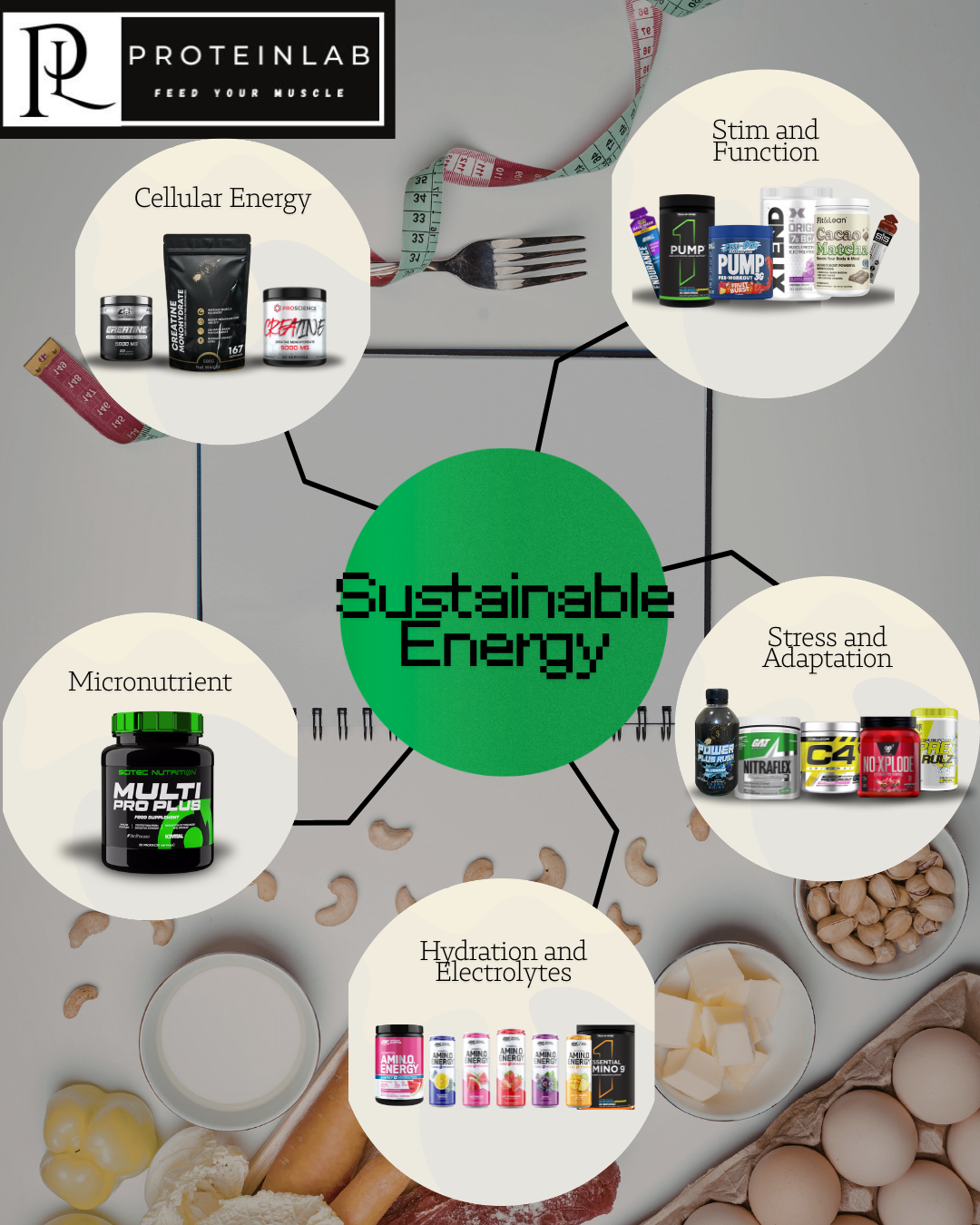
If modern fatigue is multi-factorial, then energy support must be multi-dimensional. Energy is not built from one ingredient. It is supported through cellular function, hydration, stress regulation, and neurological performance. Effective energy-focused supplementation should include:
Cellular Energy Support
Creatine Monohydrate → Helps regenerate ATP, improving both physical and mental energy
L-Carnitine → Enhances fatty acid transport into mitochondria
Micronutrient Foundation
B-Complex Vitamins → Drive metabolic pathways
Magnesium → Supports ATP function and stress regulation
Iron → Improves oxygen transport
Hydration and Electrolytes
Electrolyte blends (Sodium, Potassium, Magnesium) → Maintain fluid balance and nerve signalling
Hydration powders / intra-workout drinks and gels → Support endurance and reduce fatigue during long days
Stress and Adaptation Support
Ashwagandha → Cortisol regulation and recovery
Rhodiola → Mental endurance and fatigue resistance
Ginseng → Physical and cognitive performance
These are often present in many pre-workout formulas.
Low-Stimulant & Functional Energy Boosters
Low-stim pre-workouts → Combine mild caffeine with nootropics and adaptogens
Non-stim pre-workouts → Focus on blood flow, endurance, and cellular energy (no caffeine)
Intra-workout formulas (EAAs + electrolytes) → Maintain energy during long sessions
Greens powders / superfood blends → Fill micronutrient gaps and support overall vitality
In today's Malaysian lifestyle, the biggest limitation is no longer muscle mass; it is energy availability. Many people already consume enough protein, follow structured workout routines, and maintain reasonably balanced diets, yet still find themselves constantly fatigued. This is because the real issue is not simply physical output, but the body’s ability to recover, regulate stress, and sustain energy production at the cellular level.
Modern fatigue is driven by accumulated stress, poor sleep, and inefficient energy metabolism, not a lack of training intensity. As a result, the role of supplementation is evolving. Instead of focusing purely on muscle growth or high-stimulant pre-workouts, there is a growing shift toward supporting daily energy, improving stress resilience, and enhancing long-term performance.
Muscle-focused supplements are still valuable for training and physical development, but they address only a small part of overall performance. Energy-focused supplementation, on the other hand, supports how you function throughout the entire day; physically, mentally, and metabolically.
Ultimately, muscle supplements help you perform in the gym, but energy supplements determine how well you perform in life. And in a culture defined by constant fatigue, that distinction matters more than ever.
Be safe and rest assured you are getting 100% authentic products at the lowest price when you purchase from ProteinLab Malaysia.
You can also like our Facebook for more promotion news at :
Or you can also follow Instagram for more nutrition tips: